Journalist Dr. Magdy Kamel El-Hawary Writes : The New Iranian Supreme Leader Defies Nuclear Agreements and Declares Nuclear Weapons a Sovereign Right


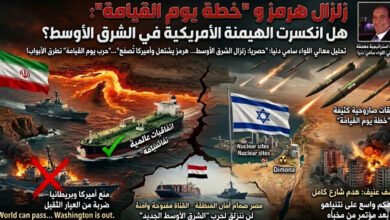
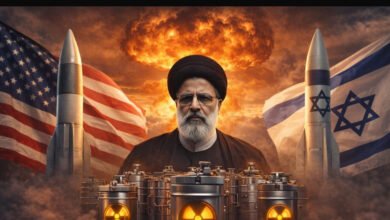
In a move described as one of the most dangerous developments in the Middle East in years, Iran’s new Supreme Leader, Mojtaba Khamenei, has reportedly issued a decision cancelling all international agreements related to restricting Iran’s nuclear program, declaring that possessing nuclear weapons is a “sovereign right” of Iran to protect its national security and independence.
The announcement comes at an extremely sensitive geopolitical moment and effectively signals Tehran’s departure from the restrictions imposed by international agreements, most notably the Joint Comprehensive Plan of Action (JCPOA), the nuclear deal signed between Iran and world powers in 2015.
Iran Enters a New Phase
The Iranian statement clearly indicated that Tehran will no longer accept what it describes as “political constraints imposed on its sovereignty.” According to the statement, the nuclear program is no longer merely an energy or scientific project, but has become part of the country’s strategic deterrence system.
According to widely circulated Western estimates from research centers, Iran possesses hundreds of kilograms of highly enriched uranium, which could theoretically allow the production of several nuclear warheads if the material were further enriched to weapons-grade levels.
This shift in Iran’s rhetoric represents a transition from a policy of “nuclear ambiguity” to what could be described as an openly declared “nuclear entitlement.”
Shockwaves in Washington
In the United States, the decision has raised deep concerns within political and security institutions.
Reports from decision-making circles in Washington suggest that the U.S. administration is examining multiple scenarios, ranging from unprecedented economic sanctions and intensified international isolation of Tehran, to potential military options should Iran move closer to actually producing a nuclear weapon.
American strategic analysts believe that Iran’s declaration that nuclear weapons are a “sovereign right” could set a dangerous precedent, potentially encouraging other countries in the region to pursue similar capabilities, thereby triggering a nuclear arms race in the Middle East.
Israel: The Red Line Is Approaching
In Israel, the response has been even more forceful.
Israeli security institutions view any Iranian approach toward nuclear weapons capability as an existential threat to the state. Consequently, the announcement may revive discussions of a pre-emptive strike against Iranian nuclear facilities.
Israel has repeatedly stated that it will not allow Iran to obtain nuclear weapons under any circumstances.
Military experts warn that any Israeli strike would unlikely remain a limited operation and could rapidly escalate into a broader regional conflict across multiple fronts in the Middle East.
A New Era for the Middle East
If Iran proceeds with this path, the decision could dramatically reshape the regional balance of power.
An Iranian nuclear capability would alter the strategic equation of the Middle East and could push regional powers toward launching their own nuclear programs — a scenario repeatedly warned about by the International Atomic Energy Agency.
Such escalation could also threaten international shipping routes in the Gulf and have a direct impact on global energy markets.
The Most Critical Question
The key question now facing the world is:
Is Iran’s declaration merely a political pressure tactic aimed at forcing new negotiations with global powers?
Or is the Middle East truly standing on the brink of the emergence of a new nuclear power?
Either way, the region appears to be entering a far more complex and dangerous phase — where the conflict is no longer solely about political influence or conventional military power, but about the most destructive weapon ever created by humanity.