Dr. Magdy Kamel El-Hawary Writes : Why Does Platform X Suspend Accounts That Criticize Israel and Zionism While Rejecting Freedom of Expression?

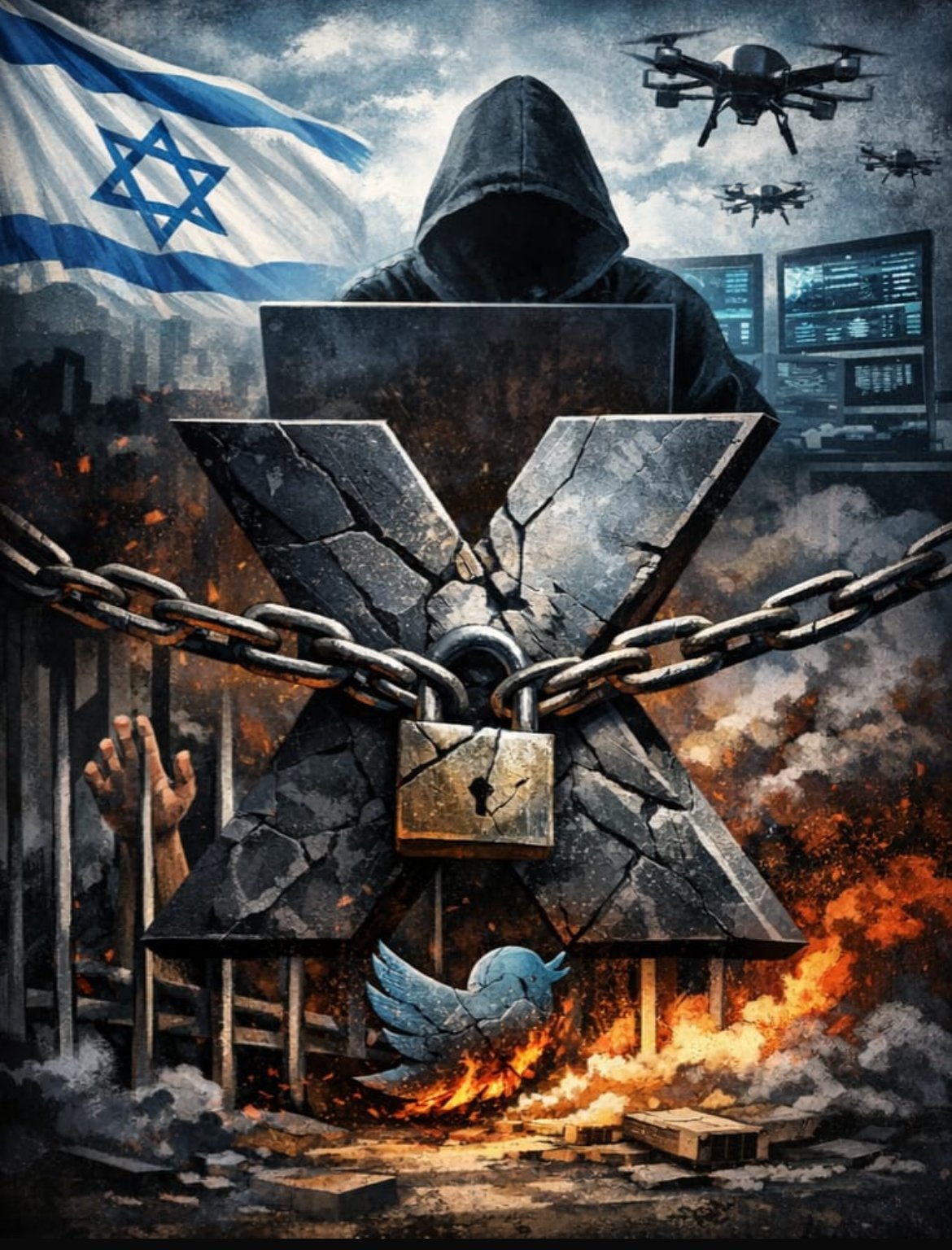
In a world that is supposed to have become an open digital village, where slogans of free speech are widely promoted, serious questions are being raised about the policies of social media platforms—most notably X. The platform has, in recent years, transformed into a battlefield of political and media conflicts no less intense than those on the ground.
Since billionaire entrepreneur Elon Musk acquired the platform, he promised to expand freedom of expression and reduce restrictions. However, the reality observed by many users—especially in the Arab world—appears quite different. Repeated complaints have emerged about the suspension or restriction of accounts that criticize Israel or Zionism, while other accounts publishing opposing narratives remain largely unaffected.
Digital Double Standards
The criticism directed at the platform is not limited to isolated decisions, but rather what many describe as a pattern of “double standards.” While certain posts are classified as “hate speech” or “incitement,” their authors argue that they represent legitimate political expression, particularly within the context of a decades-long conflict.
This raises a fundamental question:
Are the rules applied equally, or are there political and economic considerations influencing moderation algorithms?
Algorithms… The Hidden Judge
Like other major platforms, X relies on artificial intelligence systems to monitor content. However, these algorithms are not entirely neutral. They are trained according to specific policies that may reflect certain biases or external pressures.
In many cases, users are unable to determine the exact reason behind the suspension of their accounts or the restriction of their content, which increases the sense of digital injustice and lack of transparency.
Political Pressure or Protection Against Extremism?
From another perspective, the platform defends its actions by claiming to combat hate speech and incitement to violence—a principle that is widely accepted in theory. However, the real issue lies in defining what constitutes “hate.”
Is criticizing a state or an ideology considered hate speech? Or is it a natural part of freedom of expression?
At this point, political factors become highly influential, particularly given the sensitivity surrounding Israel in Western societies, the role of lobbying groups, and legal frameworks that impose strict limitations on content perceived as anti-Semitic.
Economics and Advertising… The Silent Player
Platform decisions cannot be separated from economic interests. Major advertisers—especially in the United States and Europe—prefer a “safe” environment that avoids highly controversial political content.
This often pushes platforms toward stricter moderation policies to avoid losing advertising revenue, even if that comes at the expense of free expression.
Has Digital Free Speech Ended?
The bigger question remains:
Are we still living in an era of free speech, or have we entered a phase of “conditional freedom”?
Reality suggests that freedom of expression on digital platforms is no longer absolute. It is governed by a complex equation that combines politics, economics, and technology.
Conclusion
What is happening on platform X is not merely a set of technical decisions. It reflects a broader struggle over narrative control—over who has the right to shape and present the truth in the digital age.
In the absence of full transparency, the debate will continue. And users, particularly in the Arab world, will keep asking:
Is their voice truly heard, or is it being filtered through unseen standards?