Media Figure Dr. Magdy Kamel El-Hewary Writes : Has the War Approached Its End… or Are We on the Brink of a More Dangerous Beginning?

Media Figure Dr. Magdy Kamel El-Hewary Writes : Has the War Approached Its End… or Are We on the Brink of a More Dangerous Beginning?
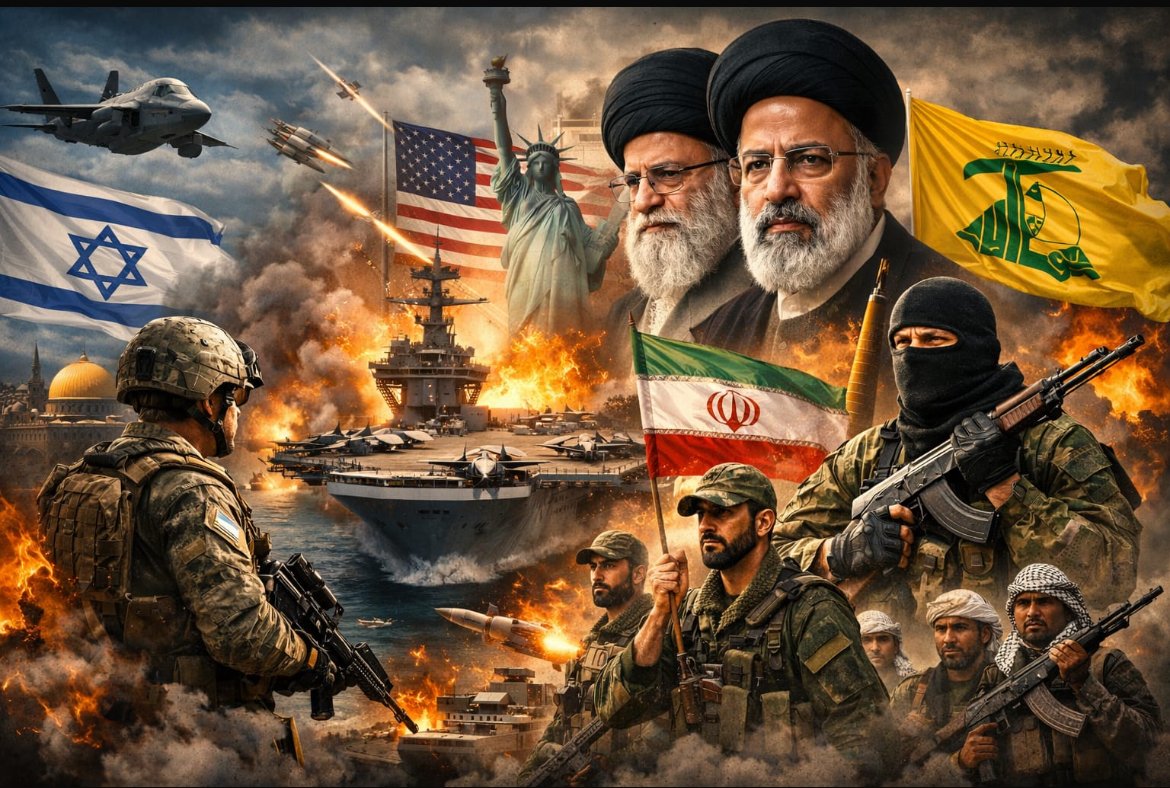
The current landscape is no longer a conventional conflict between two states. It has evolved into a complex web of overlapping wars, where interests intersect, fronts multiply, and the limits of global power are being tested in real time.
What is unfolding between Iran and Israel is no longer merely a direct confrontation. It has transformed into a multi-layered conflict, fought through proxies and fueled by major global powers—foremost among them the United States.
First: The Balance of Military Power… Who Holds the Upper Hand?
On paper, Israel maintains a clear technological superiority, supported by advanced air defense systems, high-level intelligence capabilities, and open-ended military backing from the United States.
However, Iran is playing an entirely different game—
a strategy based on long-term attrition rather than rapid decisive victory.
Iran does not rely solely on its conventional military forces. Instead, it leverages a wide regional network of allies:
Hezbollah in Lebanon
Houthis in Yemen
Shiite armed factions in Iraq
This transforms the war into a multi-front conflict, rather than a single battlefield engagement.
Second: Gains and Losses… Who Is Paying the Real Price?
Israel:
Despite its strength, it faces unprecedented pressure:
Military exhaustion due to multiple active fronts
Economic strain caused by disruptions across vital sectors
Declining public confidence in leadership
Iran:
Achieves strategic gains without engaging in full-scale direct warfare
Expands regional influence through its proxy network
Yet continues to endure economic pressure and sanctions
The Region as a Whole:
Rising energy prices
Disruptions to maritime navigation
Escalating security tensions threatening broader regional stability
Third: What Is Happening Inside the United States?
The United States finds itself in a genuine strategic dilemma:
Providing unwavering military and political support to Israel
While simultaneously trying to avoid a full-scale war with Iran
Domestically, the U.S. is deeply divided:
One camp advocates for stronger military engagement
Another firmly rejects entering a new war, particularly after the experiences of the Iraq War and the War in Afghanistan
This division significantly constrains military decision-making.
Fourth: The Internal Situation in Israel
Inside Israel, tensions have reached unprecedented levels:
Increasing public pressure on the government
Growing fears of a prolonged, multi-front war
Erosion of the sense of security—arguably the most dangerous challenge any state can face
Israel has historically been accustomed to short, decisive wars—not prolonged, open-ended conflicts.
Fifth: Are We Facing a Major Regional War?
The involvement of actors such as:
Hezbollah
Houthis
Armed factions in Iraq
Clearly indicates that we are no longer witnessing a limited conflict.
We are now facing a scaled-down model of a regional war—one that holds the potential to fully erupt at any moment.
Conclusion: End… or Beginning?
If the war were to stop now,
it would mark the end of a round.
But if it continues and expands,
we are entering the beginning of a new phase—one that could reshape the Middle East entirely.
History teaches us that major wars do not begin with a single decisive strike,
but rather through a series of escalating steps that all parties believe they can control.
Yet the undeniable truth remains:
The world today stands closer to the edge of explosion than ever before.