Dr. Magdy Kamel El-Hawary Writes : Who Is the Sole Beneficiary of the Gulf War ? The United States and Israel at the Center of the Scene .

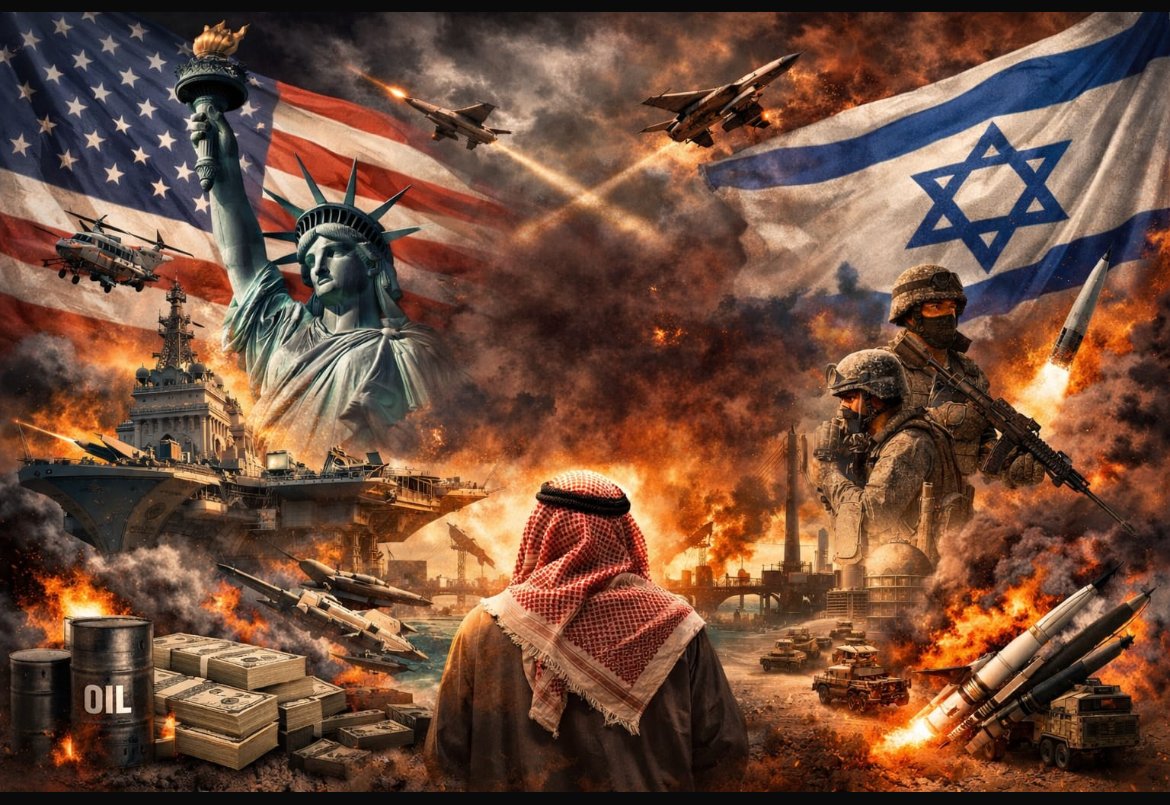
Amid the rapidly escalating tensions in the Gulf region, a fundamental question resurfaces with urgency: who truly benefits from this war? Is it a defensive confrontation, or a calculated reshaping of global influence?
The reality—uncomfortable as it may be—is that the primary beneficiaries are the United States and Israel. However, their gains extend far beyond simplistic narratives, rooted instead in a complex web of strategic, economic, and geopolitical interests.
First: The United States — War as a Tool of Influence
For decades, the United States has treated conflict as a mechanism to recalibrate global power dynamics. From the Gulf War 1991 to the Iraq War 2003, the outcomes have been strikingly consistent: expanded military presence and deeper control over strategic energy resources.
Today, a similar pattern is emerging, albeit in a more complex form:
Rising oil prices benefiting major American energy corporations
Increased arms sales to Gulf allies
Reinforced military presence in one of the world’s most critical regions
Strategic pressure on rivals such as Iran and Russia
Second: Israel — The Silent Beneficiary
Meanwhile, Israel secures significant strategic advantages without direct large-scale engagement:
Regional powers becoming preoccupied with internal and external conflicts
The Palestinian issue losing priority on the international agenda
Expanding normalization opportunities under the framework of shared threats
Weakening of adversarial regional forces, particularly Iran
This reflects a calculated strategy: achieving gains without bearing the direct costs of war.
Third: Who Pays the Price?
In contrast, Gulf nations bear the heaviest burden:
Economic strain and resource depletion
Direct security threats
Decline in foreign investment and tourism
Prolonged instability
The broader Arab world also faces serious repercussions, including inflationary pressures and disruptions in global supply chains.
Future Scenarios
1. If the War Ends Now
Should the conflict cease at this stage:
The United States would retain strategic gains without prolonged attrition
Israel would consolidate its political advantages
Gulf states would enter a phase of economic recovery
Oil markets may stabilize temporarily
However, the underlying tensions would remain unresolved, leaving the door open for future escalation.
2. If the War Continues
If the conflict persists:
Energy prices could surge dramatically
The war may expand geographically
Major powers such as Russia and China could become more directly or indirectly involved
Global military spending would rise at the expense of development
3. If the Conflict Escalates Further
In a worst-case scenario:
Maritime routes in the Gulf, particularly the Strait of Hormuz, could be threatened
A severe global energy crisis may unfold
Economically fragile states could face collapse
The conflict could evolve into a broader regional or even international confrontation
A World on the Brink of Transformation
If the war intensifies, the global order itself may undergo profound changes:
Shifts in geopolitical power centers
Emergence of new alliances
Acceleration of the global arms race
Deepening divisions between major world blocs
Conclusion
Wars are not fought solely with weapons—they are driven by interests.
In this conflict, while many actors are involved, the greatest advantage lies with those who emerge without bearing the direct costs. In that regard, the United States and Israel appear to be in the strongest position—while others continue to pay the price.